What exactly is the Anion Gap?
The anion gap is a derived measurement calculated from common electrolytes in a serum chemistry panel. It helps clinicians assess acid-base balance and recognize types of acid-base disorders, especially when assessing possible metabolic acidosis. Although it is not a directly measured value, it shows the difference between major positively charged and negatively charged particles in blood chemistry.
In practical terms, the anion gap helps determine the balance between unmeasured anions and unmeasured cations. A change in this balance can signal an underlying electrolyte imbalance, a metabolic derangement, or a specific disease process that needs further medical evaluation. Because it uses routine serum electrolytes, it is a useful diagnostic tool in everyday care.
The anion gap is often reviewed alongside the basic metabolic panel and sometimes with blood gas analysis to understand a patient’s acid-base status. It is best thought of as a laboratory assessment Learn here that informs clinical judgment rather than replacing it. In that sense, it serves as a risk indicator for certain conditions and a guide to next steps in the diagnostic evaluation.
Anion Gap Calculation Formula
The standard anion gap calculation formula is given below:
Anion gap = sodium - (chloride + bicarbonate)
In this formula, sodium is the major measured cation, while chloride and bicarbonate are the major measured anions. The calculation estimates the amount of anion concentration not directly measured in routine testing.
Various laboratories may use somewhat different calculation methods. A few include potassium, though many clinical formulas do not. Because the details can vary, the reference interval or reference range may also differ depending on the laboratory and the assay used.
The formula is basic, but the clinical interpretation is less straightforward. A above-normal value can point toward high anion gap metabolic acidosis, while a lower-than-expected value may suggest a measurement issue, protein abnormality, or a shift in electrolyte balance. This is why the formula is only the starting point for clinical interpretation.
The way the Anion Gap Calculator Operates
This Anion Gap Calculator performs the calculation and allows users to quickly enter input values for sodium, chloride, and bicarbonate. When the measured electrolytes are entered, the calculator does the math and shows the calculation result.
Many calculator tools are created to minimize manual errors and accelerate the review of test results. This approach makes them especially useful during a busy medical evaluation, when quick pattern recognition matters. The calculator can also offer a more structured interpretation guide for clinicians and students training how to identify abnormal patterns.
A good calculator does more than simply produce a number. It can help users check the result with a reference range, assess whether serum albumin may be affecting the result, and think through the possibility of a corrected value. Therefore, the calculator becomes part of a broader laboratory assessment and not just a math tool.
For instance, if the sodium level is 140, chloride is 102, and bicarbonate is 24, the formula would yield an anion gap of 14. Whether that is normal depends on the lab’s reference range and the clinical context. This illustrates why the Anion Gap Calculator should be used with the patient’s full picture in mind.
Typical Anion Gap Range
The usual anion gap is not identical across all laboratories because different methods and measurement systems affect the expected range. In many settings, the interval is based on the lab’s own laboratory values and assay characteristics. For that reason, the most accurate comparison is always to the specific reporting lab’s listed range.
Albumin has a major impact on shaping the observed gap because it is an important unmeasured anion. If serum albumin is low, the apparent gap may also be lower than expected even when other processes are present. This is why a single number should not be interpreted in isolation.
Understanding the normal range is essential for identifying whether a result reflects a true physiologic change or simply normal variation. The goal is not to memorize one universal cutoff, but to interpret the result against the proper reference interval and the patient’s overall condition.
When reviewing anion gap values, clinicians look for consistency across the patient’s electrolyte profile, symptoms, and other labs. The number becomes more meaningful when paired with acid-base status, serum chemistry trends, and the broader clinical picture.
Elevated Anion Gap Causes
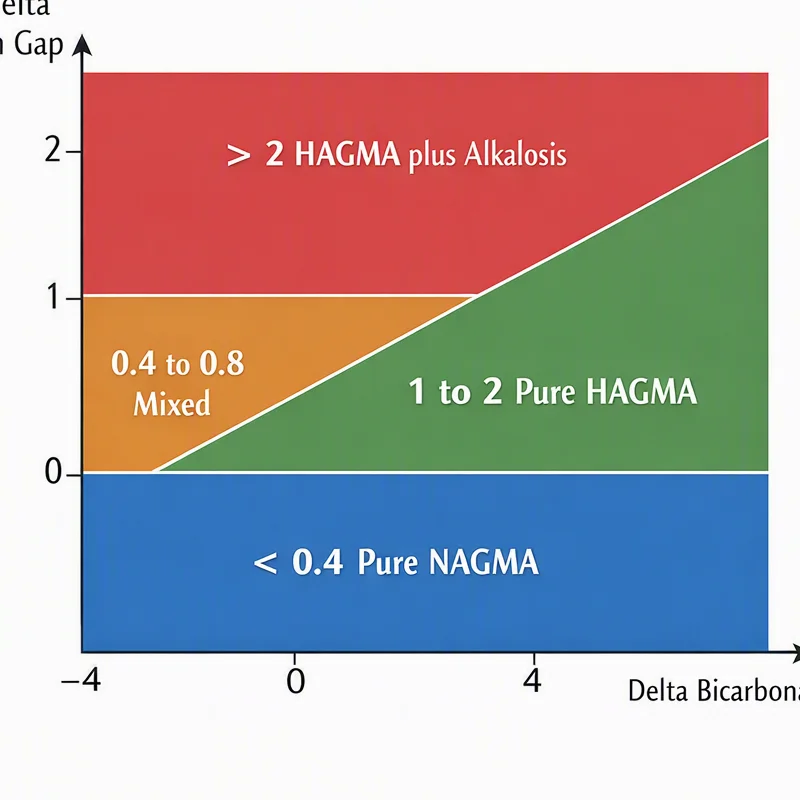
A high anion gap may indicate the presence of additional acids in the body and is a key clue in high anion gap metabolic acidosis. This finding reflects the accumulation of unmeasured acids that consume bicarbonate while leaving the gap widened. In many cases, this is one of the most useful ways to narrow the differential diagnosis of metabolic acidosis.
Common causes are lactic acidosis, ketoacidosis, and uremia. Lactic acidosis may develop when tissues are underperfused or under oxygen stress. Ketoacidosis is often seen with insulin deficiency or prolonged starvation states. Uremia results from reduced kidney function and the buildup of acid-related waste products.
Other contributors may include toxic ingestions and severe metabolic disruption, but the core idea remains the same: the gap rises because there are a greater number of unmeasured anions than expected. This turns the anion gap a valuable diagnostic tool for identifying a specific type of acid-base disorder.
When an elevated result is seen, clinicians often combine it with blood gas analysis and the basic metabolic panel to confirm the pattern and determine severity. A high result alone is not a diagnosis; it acts as a signpost that directs the diagnostic evaluation toward the likely cause.
Low Anion Gap Causes
A low anion gap is not as common than a high one, but it can still be medically significant. One of the leading explanations is hypoalbuminemia, because reduced albumin reduces the contribution of unmeasured anions. Without enough albumin, the calculated difference may shrink even if other aspects of acid-base physiology remain abnormal.
Another notable cause is multiple myeloma, where abnormal proteins can shift the balance of charged particles in the blood. In such cases, the low gap may be a clue to an underlying plasma cell disorder that requires further medical evaluation. Although not every low value points to a serious illness, it should not be ignored without clinical context.
Lab error is also a significant consideration. A specimen problem, instrument issue, or reporting mistake can produce an unexpectedly low result. Because of that, repeating the test and reviewing the underlying serum electrolytes is often wise when the value does not fit the clinical picture.
Less commonly, shifts in electrolyte balance or changes in unmeasured cations can contribute. The key is to consider the low value as part of a broader assessment rather than a isolated finding.
Revised Anion Gap and Albumin Correction
The adjusted anion gap recalculates the raw result for the influence of serum albumin. This albumin correction matters because albumin is a key contributor to the body’s negative charge and strongly affects the derived gap. anion gap in chronic kidney disease If albumin is low, the plain number can miss the true acid burden.
Using a corrected value improves acid-base analysis, especially when reviewing complex cases of metabolic acidosis. It allows clinicians avoid missing an elevated gap that is obscured by hypoalbuminemia. In other words, the corrected version often provides a more accurate picture of the patient’s actual acid-base state.
The correction approach differs by method, but the principle is the same: modify the observed gap based on albumin concentration and then assess the revised number against the appropriate normal range. This brings precision to the overall clinical reading and can affect how urgently a result is pursued.
Whenever albumin is significantly reduced, it is advisable to interpret the anion gap cautiously. A seemingly normal uncorrected result may still hide a clinically important disorder, so the corrected anion gap can be a more reliable reflection of the patient’s true metabolic state.
Frequent Errors In Using the Method
One frequent problem is measurement error. Tiny variations in sodium, chloride, or bicarbonate can change the final value greatly to change interpretation. This is especially relevant when the result is close to the higher or bottom edge of the reference range.
Another frequent problem concerns electrolyte units. A calculator or user must be sure the values are entered in the same units used by the formula and the lab report. Even simple formatting mistakes can lead to a misleading calculation result.
It is also important not to overlook related analytes such as ionized calcium and magnesium. While they are not part of the basic formula, abnormal levels can affect the body's overall balance and shape the broader interpretation. These factors can influence how a clinician thinks about the patient’s blood chemistry.
Finally, users sometimes forget that the anion gap is a supportive measure, not a complete diagnosis. It should be considered alongside symptoms, the basic metabolic panel, and other findings. Overreliance on the number alone can lead to missed context and weaker clinical judgment.
When to Apply the Anion Gap in Patient Care
The anion gap is most useful when evaluating metabolic acidosis, especially if the cause is not immediately obvious. It helps separate common patterns of acid-base disturbance and guides next steps in the diagnostic evaluation. In this setting, it functions as a practical marker of electrolyte imbalance and a possible clue to serious illness.
Clinicians often order or review it with a blood gas analysis to better understand acid-base status. The combination of blood gas findings, the basic metabolic panel, and the gap calculation provides a fuller picture than any single test. This makes the result more valuable in real-world medical evaluation.
It is also helpful when monitoring changes over time. A changing gap may suggest betterment or decline of an underlying metabolic derangement. In that sense, it can serve as a practical risk indicator and surveillance tool.
Because the result depends on several measured values, it can be highly informative when the diagnosis is uncertain. It helps clinicians recognize whether the issue is likely a increased-gap process, a low-gap pattern, or something affected by lab error or abnormal protein levels. That makes it a valuable component of routine laboratory assessment.
Frequently Asked Questions
What is the formula for calculating the anion gap?
The typical formula is sodium - (chloride + bicarbonate). It uses the measured electrolytes from a chemistry panel to derive the difference between unmeasured anions and unmeasured cations.
What is a normal anion gap value?
The normal range depends on the laboratory’s reference range and measurement method. Because laboratory values can vary, the most useful comparison is the range listed with the patient’s report.
What causes a high anion gap?
A high anion gap is commonly caused by high anion gap metabolic acidosis, including lactic acidosis, ketoacidosis, and uremia. These conditions elevate unmeasured acids and expand the gap.
Why is albumin correction important in the anion gap?
Albumin correction matters because serum albumin is a major unmeasured anion. If albumin is low, the uncorrected result may hide a clinically important disorder, so the corrected anion gap gives better acid-base interpretation.
Can a low anion gap be a sign of a serious condition?
Yes, a low anion gap can sometimes reflect hypoalbuminemia, multiple myeloma, or lab error. While it is not always dangerous, it deserves review because it may point to a serious underlying problem.